Japan 7-Days Itinerary
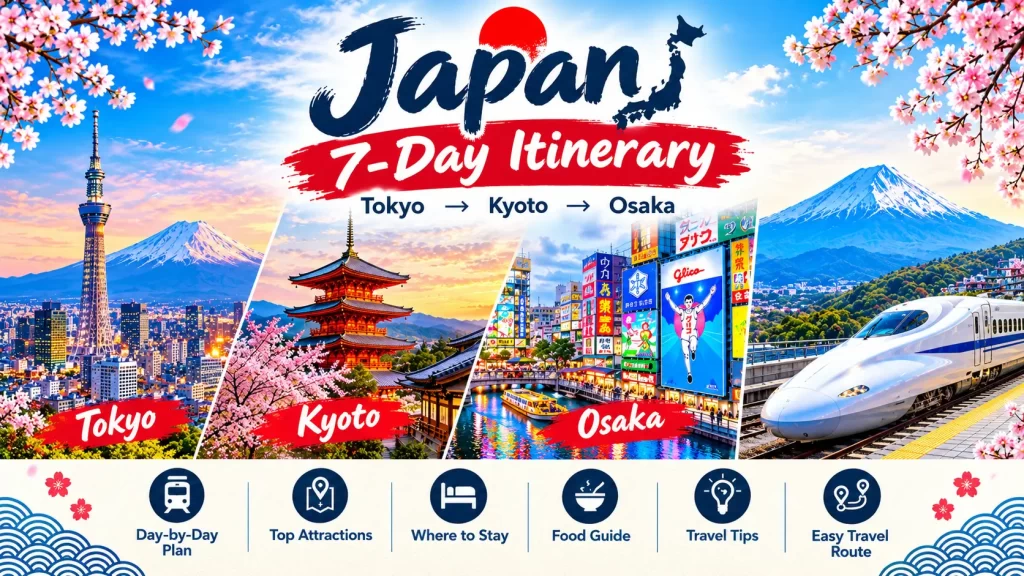
Japan 7-Day Itinerary: Perfect 7-Day Japan Trip
Planning a Japan 7-day itinerary can feel overwhelming, especially when you want to experience the country’s futuristic cities, ancient temples, scenic landscapes, incredible food, and fascinating neighbourhoods. With only one week, a well-planned 7-day Japan itinerary can help you make the most of your trip without spending too much time travelling between destinations. This one-week Japan itinerary focuses on a practical route covering some of the country’s most popular places, making it easier to enjoy a memorable Japan trip for 7 days.
This Japan 7-Day Itinerary is designed for first-time visitors who want to experience some of Japan’s most famous highlights without making the trip unnecessarily hectic. The route focuses on Tokyo, Kyoto, and Osaka, giving you a balanced introduction to modern Japanese life, traditional culture, Japanese food, and entertainment.
Whether you’re planning your first Japan vacation or looking for a simple one-week route, this guide will help you organize your days, choose where to stay, and make the most of your limited time.
Japan 7-Day Itinerary at a Glance
This one-week Japan travel route keeps transportation relatively simple while covering three of the country’s most popular destinations.
- Day 1: Arrive in Tokyo
- Day 2: Explore Tokyo
- Day 3: Tokyo to Kyoto
- Day 4: Explore Kyoto
- Day 5: Kyoto to Osaka
- Day 6: Explore Osaka or visit Nara
- Day 7: Final experiences and departure
The route can be adjusted depending on your flight times and personal interests. If you prefer history and culture, spend more time in Kyoto. If food and nightlife are priorities, give Osaka more attention.
One-Week Japan Travel Route
The basic route is:
Tokyo → Kyoto → Osaka
This is a practical option for first-time travelers because the cities offer distinctly different experiences. Tokyo is known for its huge scale and modern attractions, Kyoto showcases traditional Japan, and Osaka is famous for food, entertainment, and its lively atmosphere.
If you have additional days, you can extend the route to destinations such as Mount Fuji, Hakone, Nara, Hiroshima, or other parts of Japan.
For official planning information, including transportation, connectivity, weather, and first-time visitor advice, check the Japan National Tourism Organization’s official travel guide
Day 1: Arrive in Tokyo
Your first day in Japan should be relatively relaxed. Depending on your arrival time and how you feel after your flight, avoid scheduling too many major attractions.
After reaching your hotel, check in, freshen up, and spend the evening exploring a nearby neighborhood.
Tokyo Travel Tips for Beginners
For your first evening, Shibuya is an easy choice. See the famous Shibuya Crossing, explore the surrounding shopping streets, and find a restaurant for your first Japanese meal.
If you still have energy, continue to Shinjuku. The area is known for its bright signs, restaurants, shopping, and lively evening atmosphere.
Don’t worry about checking off a long list of attractions on your first day. Getting comfortable with Tokyo’s transportation system and recovering from jet lag can make the rest of your trip much more enjoyable.
Best Things to Do in Shibuya
Besides seeing Shibuya Crossing, you can explore the surrounding shopping areas, cafes, restaurants, and observation spots.
If you want a quieter experience, take some time to walk through nearby streets rather than spending the entire evening around the busiest tourist areas.

Day 2: Explore Tokyo’s Highlights
Use the second day of your Japan 7-Day Itinerary to discover some of Tokyo’s most recognizable attractions.
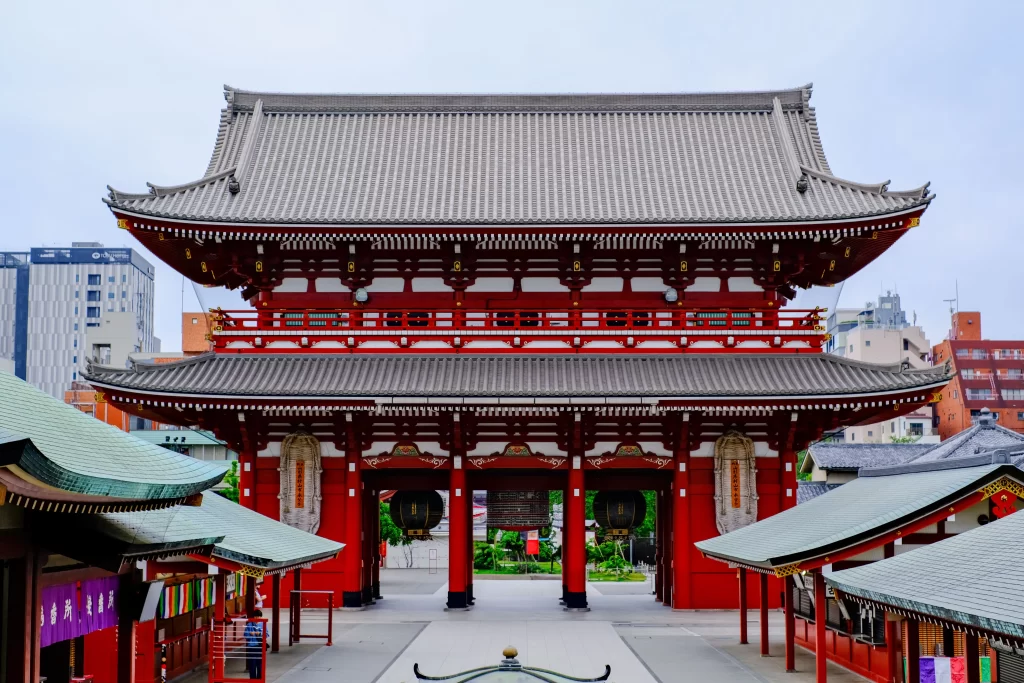
Start your morning in Asakusa, one of the city’s historic neighborhoods. Visit Senso-ji Temple and walk along Nakamise-dori, where you can browse traditional souvenirs and snacks.
From Asakusa, continue to another part of the city depending on your interests.
Tokyo Attractions for First-Time Visitors
Ueno is a good option for travelers interested in parks, museums, and cultural attractions. Akihabara is better suited to visitors interested in anime, manga, gaming, and electronics.
Later, explore Harajuku and Omotesando before finishing your day around Shinjuku or Shibuya.
Tokyo is enormous, so don’t try to visit every major attraction in one day. Choose a few areas that are relatively close together and explore them properly.
Exploring Asakusa and Shinjuku
Asakusa gives you a glimpse of Tokyo’s historical character, while Shinjuku demonstrates the city’s modern energy.
The contrast between these neighborhoods is one of the reasons Tokyo works so well as the starting point for a first Japan trip.
Day 3: Tokyo to Kyoto
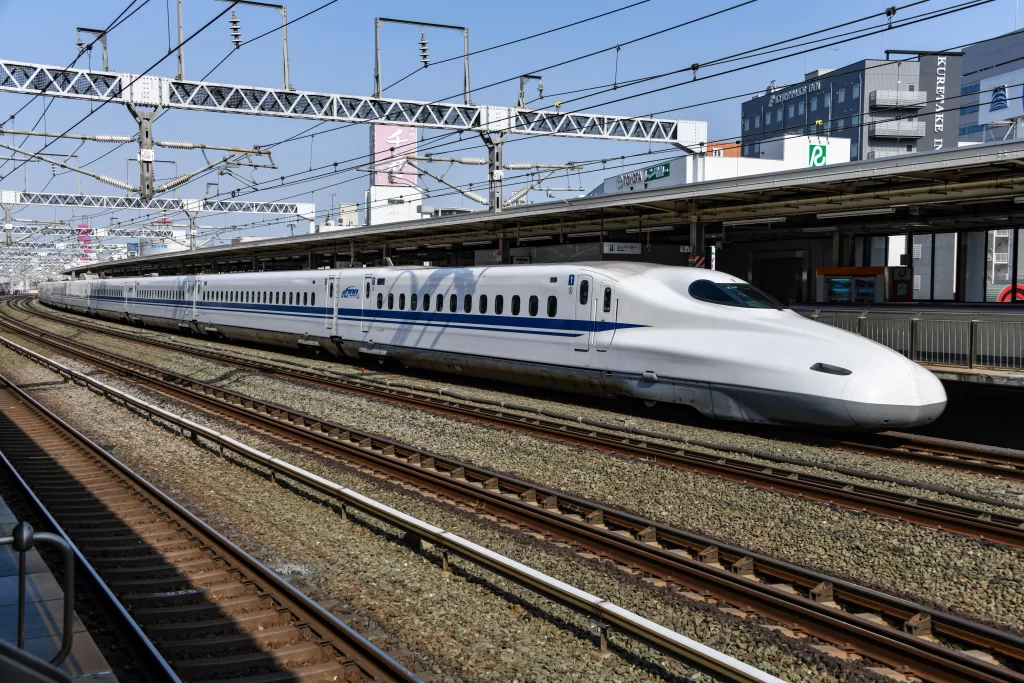
Start the third day by traveling from Tokyo to Kyoto by Shinkansen. The bullet train is one of the most convenient ways to travel between major Japanese cities.
Try to leave Tokyo relatively early so that you still have plenty of time to explore Kyoto after checking into your accommodation.
Traveling to Kyoto by Shinkansen
The Shinkansen makes the journey between Tokyo and Kyoto considerably faster than traveling by road. If you’re traveling during a busy period, check train schedules and reservation requirements ahead of time.
Once you arrive in Kyoto, leave your luggage at your hotel if your room isn’t ready and begin exploring.
First Evening in Kyoto
Spend your first evening walking around Gion, one of Kyoto’s best-known historic districts. Explore its traditional streets and nearby areas before finding a Japanese restaurant for dinner.
Keep your evening relaxed because you’ll want an early start the following morning.
Day 4: Discover Kyoto
Day four is dedicated to Kyoto, where you can experience a very different side of Japan from the modern streets of Tokyo.
Start early to make the most of the day and avoid the busiest periods at popular attractions.
Kyoto Temples and Shrines
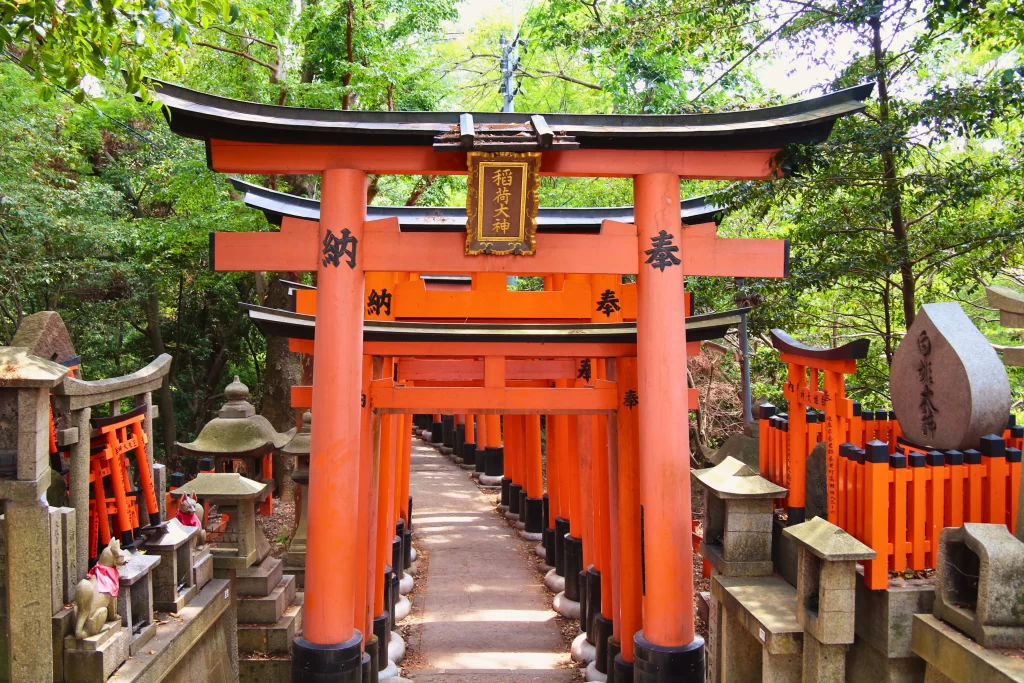
Begin at Fushimi Inari Shrine, famous for its thousands of vermilion torii gates. The pathway continues up Mount Inari, but you don’t have to complete the entire route to enjoy the experience.
Next, visit Kiyomizu-dera and explore the historic streets surrounding the temple.
Kyoto is home to countless temples and shrines, so focus on a few meaningful experiences rather than attempting to visit as many as possible.
Exploring Arashiyama and Gion
In the afternoon, head toward Arashiyama to see its famous bamboo grove and explore the surrounding area.
If you haven’t had enough time in Gion, return there in the evening. Kyoto becomes particularly atmospheric around sunset, although popular areas can remain busy
 .
.
Day 5: Kyoto to Osaka
On day five, travel from Kyoto to Osaka. The journey is relatively short, allowing you to spend most of the day exploring your new destination.
After checking into your hotel, choose between sightseeing, shopping, or simply exploring Osaka’s neighborhoods.
Osaka Travel Guide for Beginners
Osaka Castle is a popular attraction for travelers interested in Japanese history. If shopping and entertainment are more appealing, explore areas around Namba and Umeda.
Osaka is also an excellent city for trying different Japanese foods.
Exploring Dotonbori and Namba
In the evening, head to Dotonbori, one of Osaka’s most recognizable entertainment districts.
Try local favorites such as takoyaki, okonomiyaki, kushikatsu, and udon while exploring the colorful streets around the canal.
Don’t rush through dinner. Osaka’s food culture is part of the experience, so give yourself time to discover different restaurants and snacks.
Day 6: Explore Osaka or Visit Nara
Day six gives you some flexibility. You can spend the entire day exploring Osaka or take a day trip to nearby Nara.
Things to Do in Osaka
If you stay in Osaka, you could explore Shinsekai, Namba, Umeda, or Universal Studios Japan.
Universal Studios Japan can take most of a day, so choose it only if theme parks are an important part of your trip.
You can also spend the day shopping, visiting museums, discovering local restaurants, or exploring neighborhoods away from the busiest tourist areas.
Nara Day Trip from Osaka
Nara is another excellent option if you want to experience more history and traditional culture.
The city is known for its historic temples, Nara Park, and free-roaming deer. Todai-ji Temple is one of its most famous attractions.
A Nara day trip adds another destination without requiring you to change hotels, making it a convenient addition to a one-week Japan trip.
Day 7: Final Experiences and Departure
Your final day will depend heavily on your flight schedule. If you have an early departure, keep the morning simple and allow plenty of time to reach the airport.
If your flight is later, use the morning for breakfast, shopping, or one final walk around your neighborhood.
Last-Minute Things to Do in Japan
Avoid planning a major attraction far from your hotel on departure day. Instead, choose something nearby.
You could pick up souvenirs, enjoy one final Japanese meal, visit a local market, or simply relax before heading to the airport.
Remember to allow extra time for luggage, transfers, and navigating large railway stations.
Tips for a Smooth Departure
Check your airport route the night before and confirm your flight details.
If you’re departing from Tokyo after spending your final night in Osaka, carefully calculate the travel time between Osaka and the airport. Don’t leave your transfer until the last possible moment.
Where to Stay on a 7-Day Japan Trip
Accommodation can make a significant difference during a short trip. Staying near convenient transportation can save valuable time.
Best Areas to Stay in Tokyo
For easy transportation, consider areas such as Shinjuku, Shibuya, Ueno, or Tokyo Station.
Shinjuku and Shibuya are convenient for entertainment and nightlife, while Ueno can provide access to cultural attractions and transportation connections.
Where to Stay in Kyoto and Osaka
In Kyoto, areas around Kyoto Station, Gion, and central Kyoto can be convenient for sightseeing.
In Osaka, Namba and Umeda are popular choices because of their transportation connections, restaurants, and shopping.
For a short trip, convenience can be more important than choosing accommodation based solely on the lowest price.
Japan Travel Tips for a One-Week Trip
A successful Japan 7-Day Itinerary depends on keeping your schedule realistic. Seven days sounds like a lot until you account for flights, check-ins, transportation, meals, and sightseeing.
How to Save Time on Your Japan Itinerary
Group attractions by neighborhood instead of traveling across the city repeatedly.
For example, explore Asakusa and nearby attractions together rather than visiting Asakusa in the morning and returning to the same area later.
The same principle applies to Kyoto and Osaka.
Booking Trains and Attractions
Check transportation schedules before your trip and consider reservations when appropriate, especially during busy travel periods.
Popular attractions and experiences may also require advance reservations, so research your specific plans before traveling.
Avoiding Common Travel Mistakes
One of the biggest mistakes is trying to visit too many destinations.
Every additional city means transportation, luggage, check-in time, and less time actually experiencing the destination.
A slower itinerary can often provide a better travel experience than attempting to collect as many destinations as possible.
Can You See Japan in 7 Days?
You cannot see all of Japan in one week, but you can experience several major destinations.
A 7-day Japan trip covering Tokyo, Kyoto, and Osaka provides a useful introduction to modern cities, traditional culture, food, entertainment, and Japanese transportation.
Is One Week Enough for Japan?
One week is enough for a first taste of Japan, particularly if you keep your route focused.
If you want to explore Hokkaido, Okinawa, Hiroshima, or more remote areas, you should consider extending your vacation rather than trying to add everything to seven days.
How to Extend Your Japan Itinerary
If you have 10 to 14 days, you can add destinations such as Mount Fuji, Hakone, Nara, Hiroshima, Kanazawa, or Himeji.
Travelers interested in nature could consider Hokkaido, while those looking for beaches and a tropical atmosphere could explore Okinawa.
For broader destination inspiration, read our guide to 10 Incredible Tourist Places to Explore in Japan.
Frequently Asked Questions
Is 7 days enough for a Japan vacation?
Seven days can provide a good introduction to Japan if you focus on a manageable route. Tokyo, Kyoto, and Osaka can be combined into a practical first-time itinerary.
How much does a 7-day Japan trip cost?
The total cost depends on flights, accommodation, transportation, food, activities, and travel style. Budget, mid-range, and luxury travelers can have significantly different expenses.
Is Tokyo or Kyoto better for a first Japan trip?
Tokyo and Kyoto offer very different experiences. Tokyo is known for modern city life, shopping, entertainment, and diverse neighborhoods, while Kyoto is known for temples, shrines, gardens, and traditional architecture. Including both gives you a broader introduction to Japan.
Should I visit Osaka or Nara?
Both can fit into a one-week itinerary. Osaka is particularly known for food and entertainment, while Nara is better suited to travelers interested in temples, history, and traditional attractions.
Can I add Mount Fuji to a 7-day itinerary?
Yes, but you’ll need to adjust your schedule. Mount Fuji can be incorporated as a day trip or as part of a route between Tokyo and other destinations, depending on your transportation plans and preferred attractions.
Final Thoughts on Your Japan 7-Day Itinerary
A well-planned Japan 7-Day Itinerary can give first-time travelers a memorable introduction to the country without making every day feel rushed.
Tokyo offers futuristic city life, Kyoto introduces Japan’s traditional culture, and Osaka brings together food, entertainment, and a lively local atmosphere. Adding Nara or another nearby destination can provide even more variety if your schedule allows.
The most important thing is to avoid trying to see everything. Choose destinations that genuinely interest you, group nearby attractions together, and leave some room for unexpected discoveries.
With thoughtful planning, your Japan 7-Day Itinerary can turn one week into an exciting introduction to Japan—and give you plenty of reasons to return for a longer trip.