
How to Boost Self Confidence: Proven Tips That Actually Work

In this guide, you’ll learn simple, down-to-earth tips and tricks to boost self-confidence in everyday life.
Self-confidence is not an inborn trait. Instead, it is something that a person accumulates with time. Some people have doubts about themselves, experience social anxiety, and are not motivated enough. However, the good news is that with the right habits and mindset, anyone can boost their confidence.
Why Self-Confidence Matters in Life

Self-confidence has a major role in your success, relationships, and mental health. Rather, studies show that confident people perform better in their careers and personal life.
Besides, confident people are likely to; Get things done Face challenges Better handle failure
As a result, they grow up faster and achieve more in life.
The Real Impact of Confidence on Success
Confidence is an assurance that one can go ahead without contemplating too much. It also helps you to perform well under stress.
Some examples: You take action without fear You handle rejection better; Your confidence does not waver even in difficult situations.
In sports psychology, the connection between confidence and performance is so great.
Signs You Need to Boost Confidence
Some signs that you need to work on your confidence include; Constantly doubt yourself; Avoid taking on challenges Compare yourself with others Fear of judgment from people
If these signs seem familiar, psychology!
Common Myths About Confidence
First, debunk some misconceptions:
- “Confidence means no fear” → False Everyone has fear. Confidence means acting despite it.
- “Confidence is natural” → False It is a skill that one acquires.
- “Fake it till you make it always works” → Not always Confidence is derived from action and development.
Tips to Boost Self Confidence Daily

Confidence begets confidethrough small actions. Some basic tips for use daily:
1. Think Positive at the Beginning of the Day
Set your morning mindset for success in your day. So, instead of negative thoughts tell yourself: I can do this.” “I am capable.”
2. Dress Good and Feel Confident
Your look affects your feelings. Hence, your appearance affects how you feel.
3. Work on Your Body Language
Keep your body straight, your eyes locked, and your walk purposeful. The body sends signals to the brain, which enhances self-esteem.
4. Set Small Goals
Start with easy and attainable goals. This will increase your confidence in yourself.
5. Change Your Mindset.
Confidence starts in your mind. So, think positive and have confidence in yourself.
6. Stop Comparing Yourself to Others
Comparison kills confidence. Comparison is destructive to confidence.
7. Focus on Your Strengths.
Everyone has strengths. Identify them and polish them.
8. Consider Failure as Growth
Failure is a part of success. In fact, many successful people failed before they were successful.
9. Be Compassionate Towards Yourself
Avoid negative self talk. Instead, be patient and forgiving with yourself.
Habits That Strengthen Confidence
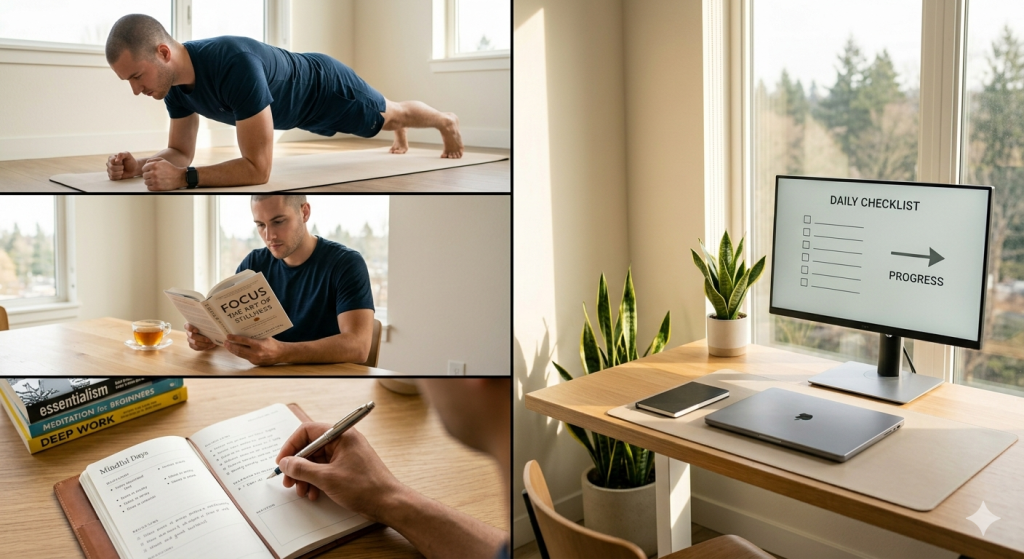
Confidence is something that builds over a period of time via one’s habits. Have a look at such powerful ones:
1. Regular Exercise
Exercise improves mood and relieves stress. All these factors have the effect of increasing self-esteem.
2. Stick to a Daily Routine
Confidence is developed out of discipline. Discipline builds confidence.
3. Surround With Positive People
Your environment counts. Stay around people who support and motivate you.
4. Learn New Skills
Learning enhances competence. And competence confidence.
Tips to Boost Confidence in Social Life

1. Enhance Communication Skills
Practice enunciating your words clearly. Talk to new people first.
2. Eye Contact
Confidence in oneself is reinforced through eye-contact and trust is built.
3. Practice Public Speaking
Speaking more will make you more confident.
4. Overcome Social Anxiety Step by Steps
Small Talk First Then gradually increase exposure to social situations.
Quick Tips to Boost Confidence Instantly

Need a quick pick-me-up? Suggestions here:
- Adopt power poses
- Take deep breaths
- Affirmations on a daily basis
- Visualize success
Mistakes That Kill Your Confidence

- Negative self-talk
- Judgmental fear
- Not taking risks
- Seeking validation
Long-Term Tips for Lasting Confidence

Confidence is not built in a day. So, have your eye on consistency:
- Keep the discipline
- Track your progress
- Celebrate small victories
- Have a strong personal identity
Conclusion: Start Your Confidence Journey Today

The best way to build confidence is through daily action.
Mind you:
- Create strong habit
- Think positive
- Be consistent
Confidence is a skill; But like any skill, it gets better with practice.
Start today.
Frequently Asked Questions(FAQ):
1. What are 5 ways to boost confidence?
- Build positive relationships.
- Be kind to yourself.
- Learn to be assertive.
- Start saying "no".
- Give yourself a challenge.
2. What are the 5 Cs of confidence?
3. What are the 10 ways to build self-confidence?
- Set Achievable Goals.
- Embrace Positive Thinking.
- Develop New Skills.
- Practice Self-Care.
- Step Out of Your Comfort Zone.
- Surround Yourself with Positive People.
- Accept and Learn from Criticism.
- Celebrate Your Achievement.
4. What causes lack of confidence?