Common Eye Diseases and Their Treatments: A Complete Guide
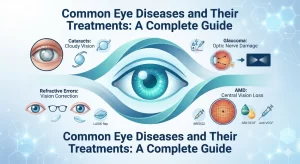
Common Eye Diseases and Their Treatments: A Complete Guide
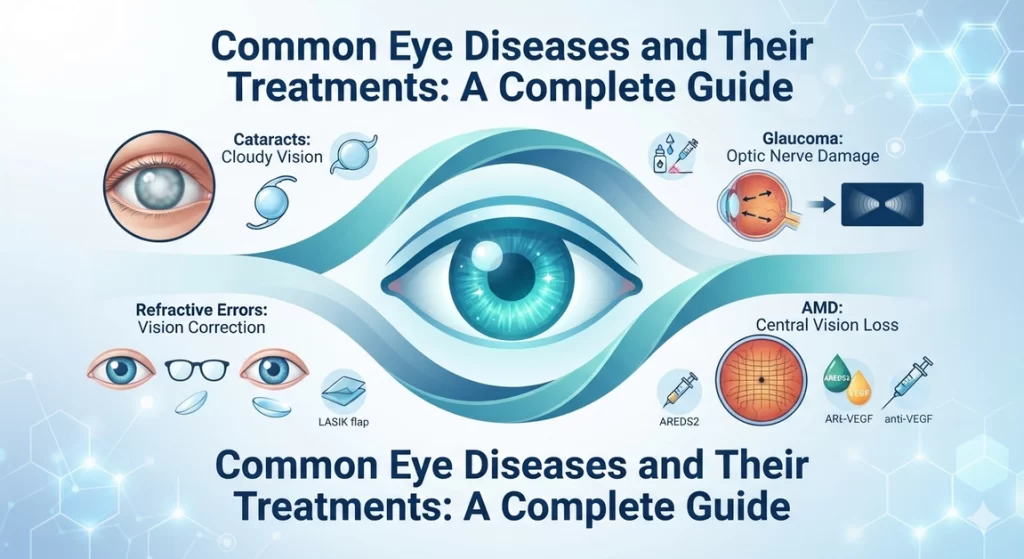
There are multiple Common Eye Diseases and Their Treatments: A Complete Guide for you. Your eyes work every moment unless you asleep, yet most of us only think about them when something goes wrong. Rising screen time, pollution, diabetes and an ageing population are making eye problems more common.A few simple eye care tips can help you to keep your eyes comfortable in your everyday life. The good news is that most eye diseases can be managed or cured if they are caught early.This guide covers the most Common Eye Diseases and Their Treatments available to patients, as well as their warning signs.
1. Cataract
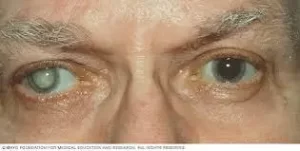
What it is:
A clouding of the eye’s natural lens that causes blurry or dim vision. It is the leading cause of treatable blindness in India.
Symptoms:
- Cloudy, foggy or blurred vision
- Glare or halos around lights, especially at night
- Faded colours
- Frequent changes in glasses power
Treatment:
Cataracts cannot be treated with eye drops or glasses in the long run. Surgery is the only effective treatment. Modern options include:
- Phacoemulsification: A small-incision, stitchless procedure with quick recovery.
- Femtosecond laser-assisted cataract surgery: A laser-assisted technique that offers high precision.
- Premium intraocular lenses (IOLs): Monofocal, multifocal and toric lenses that can reduce dependence on glasses.
Most patients go home the same day and resume normal activities within a few days.
2. Glaucoma
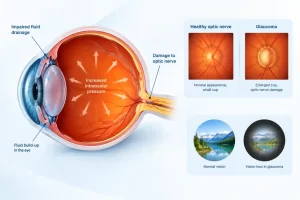
What it is:
Damage to the optic nerve, often caused by high eye pressure. It is called the “silent thief of sight” because it usually causes no pain and vision loss happens gradually.
Symptoms:
Often none in the early stage. Later, loss of side (peripheral) vision, tunnel vision, or, in acute cases, severe eye pain, headache and nausea.
Treatment:
- Pressure-lowering eye drops
- Laser treatments such as laser trabeculoplasty or laser iridotomy
- Surgical procedures, including trabeculectomy, drainage implants and minimally invasive glaucoma surgery (MIGS)
Vision lost to glaucoma cannot be restored, so regular screening after age 40 is important, especially with a family history.
3. Diabetic Retinopathy
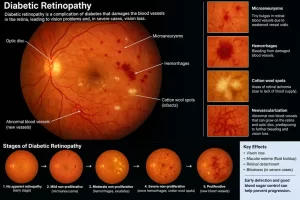
What it is:
A diabetes complication that damages the tiny blood vessels of the retina. With a large diabetic population in Punjab, Haryana and Chandigarh, this is a major concern.
Symptoms:
Floaters, blurred vision, dark patches or sudden vision loss. Early stages may have no symptoms at all.
Treatment:
- Tight control of blood sugar, blood pressure and cholesterol
- Anti-VEGF injections to reduce swelling and abnormal vessel growth
- Laser photocoagulation to seal leaking vessels
- Vitrectomy surgery for advanced cases with bleeding or retinal detachment
Everyone with diabetes should have a dilated retinal examination at least once a year.
4. Age-Related Macular Degeneration (AMD)
What it is:
Deterioration of the macula, the central part of the retina responsible for sharp vision. It mainly affects people over 50.
Symptoms:
Blurred or distorted central vision, straight lines appearing wavy, difficulty reading or recognising faces.
Treatment:
- Anti-VEGF injections for the “wet” form
- Nutritional supplements and lifestyle changes for certain stages of the “dry” form
- Low-vision aids to help with daily activities
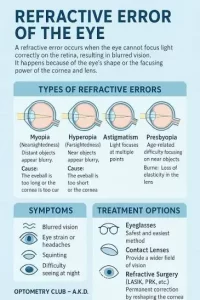
5. Refractive Errors (Myopia, Hyperopia, Astigmatism)
What it is:
Blurry vision caused by the shape of the eye, commonly corrected with glasses or contact lenses. Myopia (short-sightedness) is increasing rapidly among children because of screen use and less outdoor time.
Treatment options:
- Spectacles and contact lenses
- LASIK, PRK and SMILE laser vision correction for eligible adults
- ICL (implantable contact lens) for people with high power or thin corneas
- Myopia control in children through atropine drops, special lenses and outdoor activity
6. Dry Eye Disease
What it is:
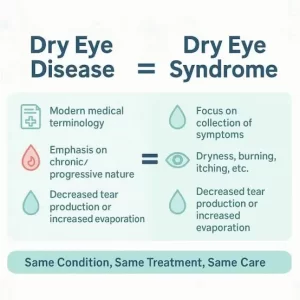
A condition in which the eyes do not produce enough tears or the tears evaporate too quickly. Air conditioning, pollution, long hours on screens and contact lens use all contribute.
Symptoms:
Burning, grittiness, redness, watering and tired eyes.
Treatment:
- Lubricating eye drops and gels
- Warm compresses and lid hygiene
- Punctal plugs
- Advanced in-clinic therapies for meibomian gland dysfunction
- Following the 20-20-20 rule (every 20 minutes, look 20 feet away for 20 seconds)
7. Conjunctivitis (Pink Eye)
What it is:
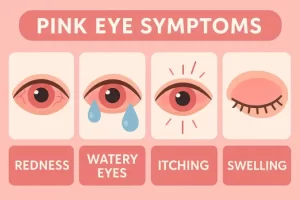
Inflammation of the thin membrane covering the white of the eye, caused by viruses, bacteria or allergies. It is common in the monsoon season.
Symptoms:
Redness, itching, discharge, watering and a gritty feeling.
Treatment:
- Depends on the cause. Antibiotic drops for bacterial infection, antihistamine or steroid drops for allergy, and supportive care for viral infection.
- Avoid self-medication, particularly steroid drops, which can be harmful without supervision.
8. Retinal Detachment
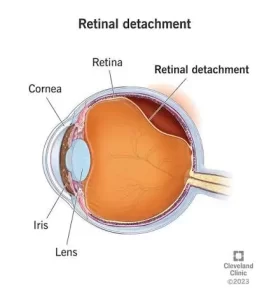
What it is:
A medical emergency in which the retina pulls away from the back of the eye.
Warning signs:
Sudden flashes of light, a shower of new floaters, or a curtain-like shadow over your vision.
Treatment:
- Urgent surgery, such as laser retinopexy, pneumatic retinopexy, scleral buckle or vitrectomy.
- Reach an eye hospital immediately if you notice these symptoms.
9. Corneal Diseases
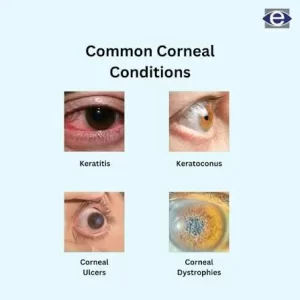
What it is:
Infections, injuries, keratoconus (a thinning, bulging cornea) and scarring that affect clarity of vision.
Treatment:
- Medicines for infections
- Corneal cross-linking to halt progression of keratoconus
- Specialty contact lenses
- Corneal transplant (full or partial) in advanced cases
10. Squint and Lazy Eye (Amblyopia) in Children

What it is:
Misaligned eyes or reduced vision in one eye that did not develop normally in childhood.
Treatment:
- Early glasses,
- Patching therapy,
- Vision exercises and,
- Squint surgery, this treatment works best when started before the age of 8 to 10, so early screening matters.
Frequently Asked Questions
1.Which is the best treatment hospital for cataract in Tricity?
Phacoemulsification with an intraocular lens is the standard, and femtosecond laser-assisted surgery is available at select centres. The best option depends on your eye health and lifestyle, so consult a cataract surgeon.
2.Which is the best treatment for cataract?
Phacoemulsification with an intraocular lens is the standard, and femtosecond laser-assisted surgery is available at select centres. The best option depends on your eye health and lifestyle, so consult a cataract surgeon.
3.Who is eligible for LASIK?
Laser vision correction such as LASIK, PRK and SMILE is offered at many advanced eye centres, but eligibility depends on detailed testing of your eyes, including corneal thickness and a stable prescription.
4.Can glaucoma be cured?
Glaucoma cannot be cured, but its progression can be controlled with drops, laser or surgery if detected early.
5.How often should diabetic patients check their eyes?
At least once a year with a dilated retinal examination, or more often if your doctor advises.
6.Is eye surgery painful?
Most modern eye procedures are done under local or topical anaesthesia and cause little to no pain.
Conclusion
From cataract and glaucoma to diabetic retinopathy and dry eye, most eye diseases are treatable, and the earlier they are diagnosed, the better the outcome. With advanced diagnostics and treatments now widely available, quality eye care is within reach. Do not ignore symptoms and do not delay routine check-ups.