Technological Advancements in Digital Future

Technological advancements have rapidly increased the speed of technological innovation over the last 12 months, and this rate has introduced much more technology than ever happened before. We used to be amazed that technology advanced quickly, while today we have not been impressed. Some examples of technological advancement in the last year include the introduction of many new types of devices or gadgets that can be used for many different things and that use computers with artificial intelligence.
Let’s look at the main technological advancements of the last 12 months and see what will be next:
AI and Machine Learning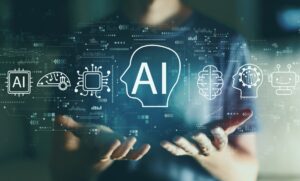
Artificial intelligence (AI), originally an idea from science fiction, now finds real, world applications such as chatbots, voice assistants, and recommendation engines. With the help of machine learning, computers are capable of getting better by learning from data without human programming. In healthcare, AI supports doctors in diagnosing patients, while in education it allows students to be taught in a way that suits them individually. In short, AI will impact every industry in our future.
Internet of Things – IoT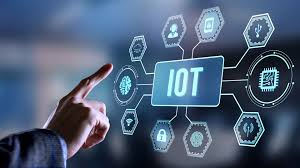
The Internet of Things (IoT) is a concept that extends the Internet to the daily usage of any internet, connected devices so they can share the information produced by those devices. The IoT refers to “smart” vehicles, factories, homes, and fitness trackers, to name a few, by way of examples. Through IoT, connected devices communicate with each other, thus attaining a higher level of efficiency. For example, smart streetlights save power while smart thermostats adjust according to demand. Additionally, through the constant monitoring and reduced human engagement in farming and industry, which is the eventual benefit of smart cities and offices, it brings about the improvements of those sectors.
Edge and Cloud Computing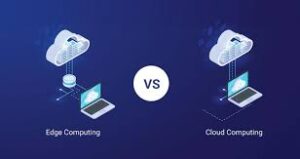
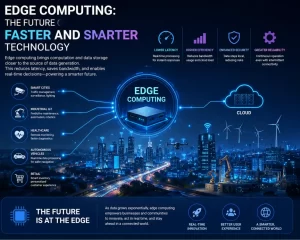
The Internet of Things (IoT) is a concept that extends the Internet to the daily usage of any internet, connected devices so they can share the information produced by those devices. The IoT refers to “smart” vehicles, factories, homes, and fitness trackers, to name a few, by way of examples. Through IoT, connected devices communicate with each other, attaining a higher level of efficiency. For example, smart streetlights save power while adjusting smart thermostats according to demand. Additionally, through the constant monitoring and reduced human engagement in farming and industry, which is the eventual benefit of smart cities and offices, it brings about the improvements of those sectors.
Privacy & Cybersecurity Technologies
Expansion of digital systems naturally leads to
growth in cyber risks. Internet fraud, ransomware and data breaches are
some of the issues that most concern both corporations
and individuals who are turning to privacy, enhancing technologies
for protection. Leading companies are employing AI, encryption, and
cybersecurity tools of different kinds to safeguard personal data and
analytics.
Extended Reality (XR):
XR is a collective term for AR, VR, and MR technologies that offer immersive experiences combining both the real and virtual worlds.
In VR, the users are surrounded by a totally synthetic environment. Conversely, with AR when a user directs a smartphone or tablet to the real world, the device overlays the user’s real surroundings with digital content.
Currently, the XR technologies are transforming the real estate, education, gaming, and healthcare industries. One of the cases of XR in medicine is a surgeon operating in VR. Also, an engineer can use MR for design and a student can take a virtual field trip in AR.
Cheaper, top, notch hardware will be the main factor in the XR adoption in everyday human activities.
Robotics and Automation
Automated robots have totally changed the style of work in the present era.
Industrial and medical robots perform almost all of the tasks while over 50% of the businesses have adopted robotic process automation to help out their productivity.
Besides the above uses, they (robots) will probably lead to increased output and thus more job opportunities in various sectors.
Green Technology & Sustainable Innovation
Technology is crucial in combating climate change by enabling efficient energy solutions and alternatives. Besides, companies start to adopt waste management practices so that they can lessen their carbon footprints. However, improvements in battery performance and the advent of smart technology are some of the factors that lead to more efficient electricity consumption.
conclusions
Technologies such as IoT, AI, cloud computing, cybersecurity, blockchain, extended reality, automation, and green tech are reshaping the way we live and interact with each other. Therefore, continuing to stay abreast of emerging technological trends allows people to become skilled in this area of growth. Moreover, emerging technologies provide an organization (or sector) with a competitive edge against other organizations (or sectors). The result of this exploration into the future of technology addresses some current issues affecting humanity as a whole. Technology aims to create smarter, more connected, and sustainable lifestyles.