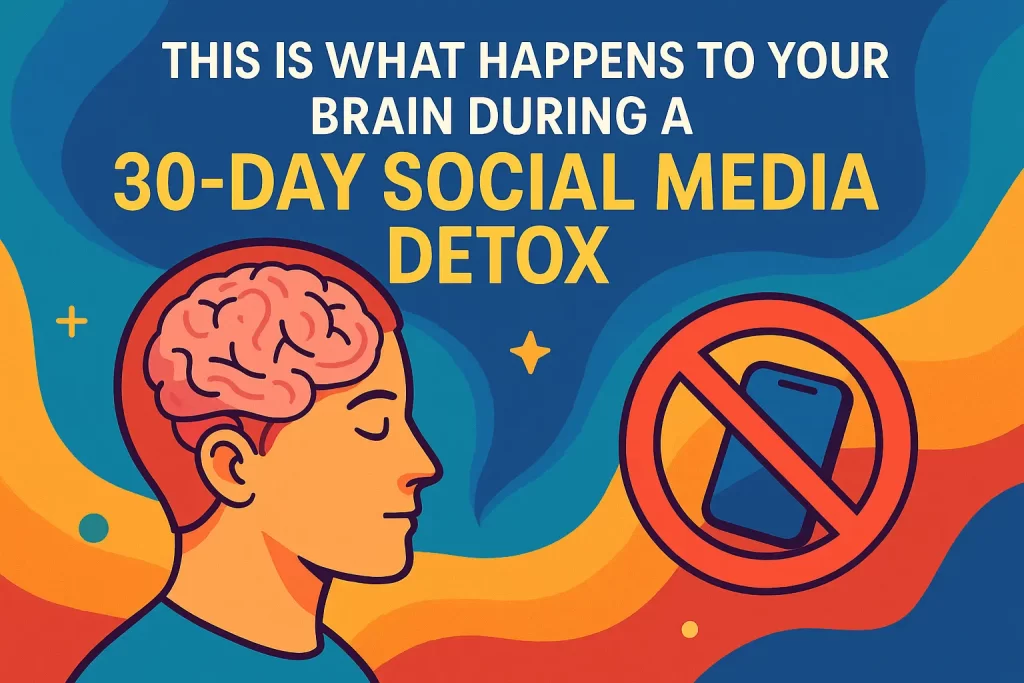
This Is What Happens to Your Brain During a 30-Day Social Media Detox
Introduction
We spend hours every day scrolling through social media—but what if a simple 30-day social media detox could rewire your brain?
In this post, we’ll explore the mental and physical benefits of quitting social media for a month—and why more people are choosing a 30-day social media detox to reclaim their time, clarity, and peace of mind.
Why a 30-Day Social Media Detox Is Worth Trying
Social media is engineered to be addictive, but stepping away—even briefly—can improve mental health. A 2023 review in Medical News Today outlined how even short breaks enhance sleep, reduce stress, and boost mood. A 30-day digital detox gives your brain the reset it needs to truly recharge.
What Happens to Your Brain When You Take a Break
1. Your Dopamine System Resets
Social platforms train your brain to crave instant gratification. A break helps reset your dopamine system, making real-world experiences more rewarding again.
2. Clearer Thinking and Better Focus
Without constant notifications, your mental clarity returns. Many who try a 30-day social media detox report sharper thinking and improved memory.
3. Better Sleep
Late-night scrolling and blue light interfere with sleep quality. A detox reduces stimulation, helping you fall asleep faster and feel more rested.
4. Reduced Anxiety and Greater Presence
Fear of missing out (FOMO) and constant comparison fuel anxiety. After a 30-day social media detox, people often feel calmer, more confident, and more engaged in real life.
Week-by-Week Breakdown
| Week | What You Might Feel |
|---|---|
| Week 1 | Restlessness, frequent phone-checking urges |
| Week 2 | Better sleep, easier focus |
| Week 3 | Boost in creativity, deeper conversations |
| Week 4 | Sense of calm, clarity, and intentional living |
How to Start Your 30-Day Social Media Detox
Final Thoughts on a 30-Day Social Media Detox
A 30-day social media detox can significantly reset your sleep, reduce anxiety, and improve attention span. Whether you return to social apps later or not, this break helps you build healthier digital habits and reconnect with real life.
For more tips on maintaining balance after your break, check out our post on Healthy Habits for Digital Wellbeing.
1. What is a 30-day social media detox?
2. What are the benefits of quitting social media for 30 days?
3. What can I expect during the detox?
4. Is it okay to return to social media after 30 days?