
Can AI replace humans in jobs by 2025?
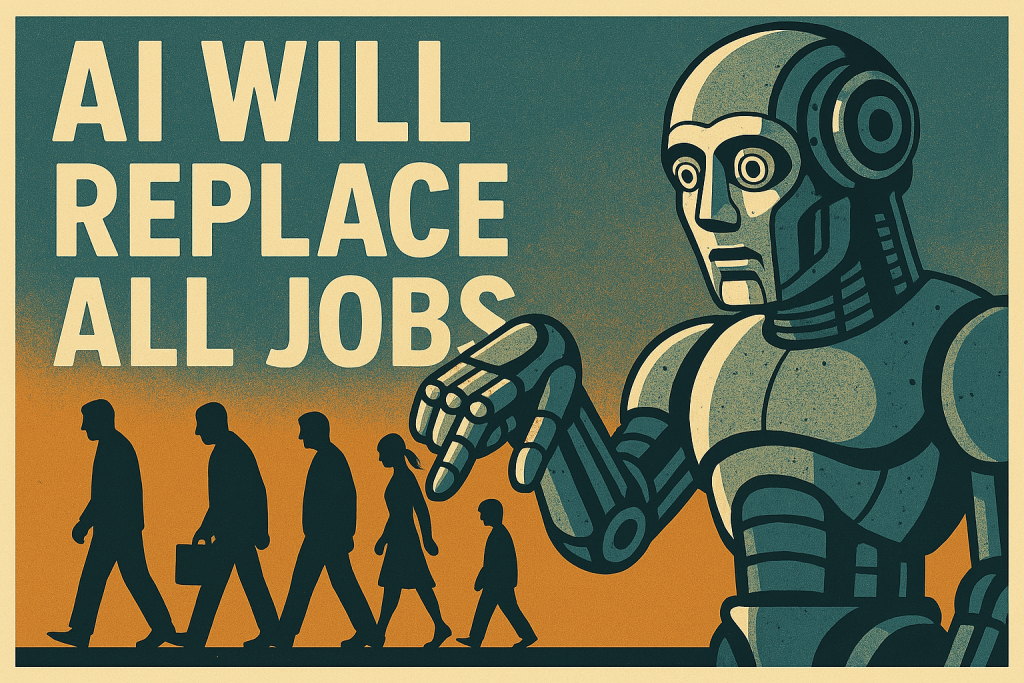
As we advance into the digital era, the question arises: Can AI replace humans in jobs by 2025? AI is now automating routine tasks, transforming industries, and becoming a part of everyday work.
However, one question that everyone seems to ask is whether AI can genuinely replace humans in the workplace by 2025.
The Growth of AI in Today’s Work Environment Today
Today, AI technologies like machine learning, natural language processing, and computer vision are already operating in the workplace. As we move to 2025, advanced AI technologies will help small businesses and large corporations use AI with ease.
Sectors Where AI Substitutes Employment
While AI still does not have the ability to fully replace the human factor in creativity and emotions, several routine and redundant tasks are being automated.
- Manufacturing: Assembly Lines. In today’s workplaces, robotic arms and AI machines are replacing human workers, as they are taking over complex and repetitive work with unmatched precision and speed as compared to human workers.
- Customer Service: The use of modern AI chatbots can resolve 80 percent of customer queries without human intervention, minimizing the need for large call center teams.
- Data Entry & Processing: AI automation software can process a high volume of data, categorize it, and enter it with greater speed and precision than humans.
- Transportation & Delivery: The expansion of autonomous vehicles and drone technologies is leading to increased automation in logistics and delivery operations.
- Healthcare Diagnostics AI technologies, like IBM Watson, can analyze X-rays, MRIs, and other lab tests far quicker than most doctors and, in some cases, surpass doctors in accuracy.
Reasons Why Certain Jobs AI is Dominating
- Cost Efficiency: Provides savings on workforce and enhances productivity.
- 24/7 Operation: Unlike humans, machines won’t need to rest, sleep, or observe holidays.
- Fewer Errors: Running on algorithms means machines are less prone to make mistakes.
- Data Mastery: AI’s ability to analyze data is unrivaled, as it can process information in seconds that would take weeks for humans.
Can AI Fully Replace Human Intelligence
- AI is at its best when the tasks at hand are logical, repetitive in nature, and systems-based.
- On the other hand, empathy, moral quandaries, and imagination remain significant challenges.
- Teachers, therapists, designers, and business strategists operate on emotional intelligence and social intelligence.
- far less likely to be supplanted.
Conclusion
AI Can Take Over Work—but Not Humanity. Work automation is becoming highly viable as AI is advancing in areas such as data processing, information automation, and recognition of patterns in large data sets. Empathy, emotional intelligence, morals, imagination, and complex social interactions are some areas where humans still cannot be substituted. So, can AI replace humans in jobs? Only in logical, repetitive tasks. Blending AI with human intelligence is a better alternative to resisting advancement and fearing the unknown. It is optimistic to see AI and human intelligence as partners instead of antagonists.
Frequently Asked Questions (FAQ)
Will AI boot out humans in jobs by 2025
Will AI make new jobs?
How can workers get set for an AI age ?
What jobs will AI most likely hit?
Will AI bump up no work by 2025?