
Best Diet Plan for Weight Loss: What Works & What Doesn’t
First, it is important to understand that there is no single best diet plan that suits everyone. It might be frustrating to read this in the opening line but this raw truth is much more useful than what most diet articles do, that is to pretend that there’s one perfect diet that works for everyone, if they just follow it correctly and believe in it.
Rather in this article we will talk about what the research actually shows, what tends to work for real and most importantly about the mistakes that affect the progress of people who are genuinely trying.
Why most diets fail before they even really get going

Whenever people talk about failed diets there’s almost always an undertone of personal failure like the person wasn’t disciplined enough or didn’t want it badly enough and sometimes maybe that’s a factor. But more often, the diet is never actually compatible with the person’s real life. It is compatible with some hypothetical version of their life — the version where they have plenty of time for meal prep, enough money to buy specific ingredients, and a social calendar that somehow never involves food.
Butreal life doesn’t look like that. Real life has birthday parties, work lunches and some tired days also where cooking feels nearly impossible.
And if the diet you’re following has no flexibility then one bad meal means you’ve spoiled your diet completely and should just restart on Monday and the loop continues forever, eventually leading to failure. The fact is that the diets that stick long term are the ones built around your daily life scenario, not around whoever wrote the plan.
What our body actually needs
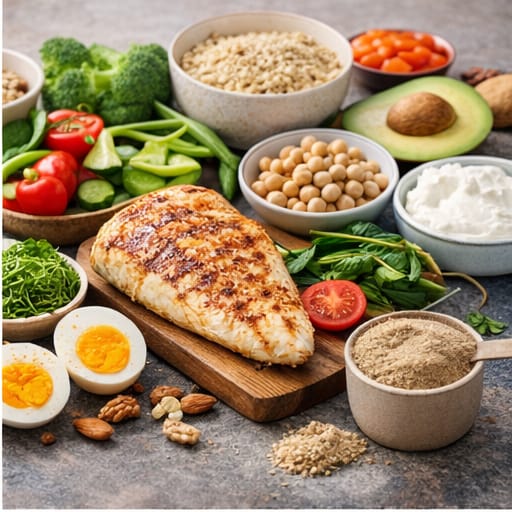
At the most basic level, weight loss happens when you’re consistently eating a bit less energy than your body is using, that’s the foundation. Everything else is just details about how to make that sustainable and long term.
There are two details that matter the most-
Protein — probably the most important thing you’re not eating enough of. Most people trying to lose weight are not eating enough protein and it’s probably one of the main reasons they’re always hungry.Having protein in your diet usually keeps you fuller for longer compared to carbs or fat. It preserves muscle mass while you’re in a calorie deficit, which matters more than people actually think because muscle tissue burns more energy at rest than fat does.
Fibre is not talked about enough usually. Foods high in fibre like vegetables, legumes, whole grains slow digestion down, keep you fuller for longer and stabilises blood sugar which reduces cravings.
A meal built around fibre and protein genuinely keeps you satisfied for hours.
What a realistic day of eating could look like
These are ideas rather than a rigid plan as rigid plans are part of the problem, as we’ve established.
Your breakfast should start with protein.Eat something with plenty of protein in it that’s the main goal like eggs,greek yogurt or a protein smoothie.The reason behind is pretty simple having your breakfast with protein will keep you actually full for longer and you will not be craving some snacks or munching an hour later.
Lunch is the real food that actually fills you.
Salad with some kind of protein like chicken, tuna, chickpeas or a grain bowl or even soup with some bread works fine.The goal is volume with fibre and protein that leads to actual satisfaction not just eating something and then still feeling a bit empty later on.
Dinner should be simpler than most people make it
This should be simple-protein, vegetables or something filling, that’s a complete dinner.
Salmon with roasted vegetables and some rice, chicken thighs with some vegetables or a bean stew with bread. These aren’t fancy but they’re satisfying and you can make them without spending an hour in the kitchen.
Some snack options for the day can be fruit, nuts, yogurt, hummus with vegetables, and a boiled egg are some good options, not crackers or sugary drinks that spike your blood sugar and leave you hungrier than before you ate them.
7 Most common mistakes in dieting
Eating too less-
People significantly cut their calories trying to lose weight faster, but the truth is they lose muscle alongside body fat, their metabolism slows down heavily, they feel terrible, and eventually they break and eat everything in sight.
A moderate deficit — roughly 300 to 500 calories below what you need — is sustainable and effective
Drinking calories without really noticing
Juice, smoothies, fancy coffee drinks, alcohol — liquid calories add up surprisingly fast and don’t make you feel full the way solid food does. This is an easy place to be consuming way more calories than you actually think.
The all-or-nothing spiral
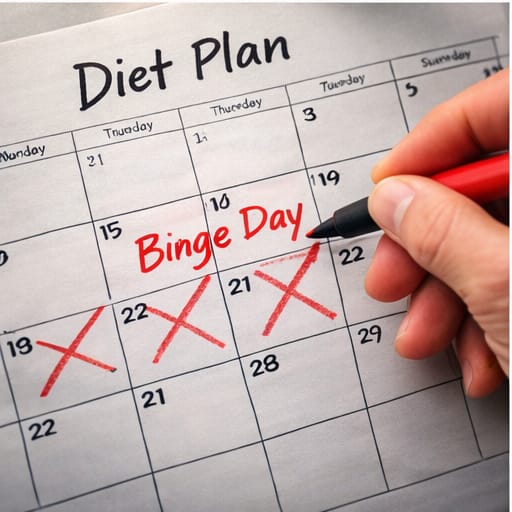
This one probably derails more people than anything else on this list. One bad meal and the whole day gets written off -“i’ve already ruined it so I might as well just eat what i want and start fresh tomorrow.” the original mistake might be 600-800 extra calories but the response to the mistake could be 2000-3000 calories.The people who actually lose weight and keep it off aren’t the ones who never mess up. They’re the ones who mess up and then just carry on rather than spiralling.
Not drinking enough water
Dehydration creates a sensation that’s genuinely easy to confuse with hunger, a lot of unnecessary snacking is actually just thirst. Drinking a glass of water before meals helps with feeling full faster. For healthy metabolism also an average adult should drink 3 to 4 liters of water daily.
Eating too fast
There’s a lag of roughly 15 to 20 minutes between your stomach being full and your brain actually registering that it’s full. If you eat quickly you’ll consistently eat past the point of fullness before that signal arrives. Slowing down, actually tasting the food, putting the fork down between bites — these things reduce how much you eat without you having to consciously restrict anything.
Skipping meals to bank calories
This system usually backfires because by the time the next meal comes on the table you’re so hungry that making careful or rational food choices seems basically impossible. Extreme hunger overrides the good intentions pretty reliably. Eating regularly at a moderate level usually beats skipping meals and then compensating with a massive dinner every single time.
Having no plan at all
Just hoping that good food decisions happen spontaneously when you’re tired and hungry and there’s nothing prepared that usually doesn’t help. Even a rough idea of what you’re going to eat removes so much friction and takes the willpower requirement almost completely out of it. The goal is just to remove the moment where you’re hungry, tired and making decisions from scratch with nothing available because that moment is where most diets quietly fall apart.
The honest stuff about sustainable weight loss
Consistency beats perfection-
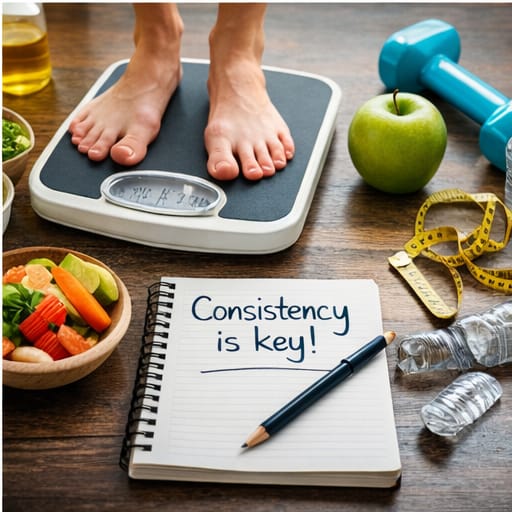
Consistency over a long period of time is what produces results-not the perfect plan executed for two weeks. Boring, mostly-good eating done consistently over months is what actually shifts things. Most people never get there because they keep restarting instead of continuing.
Why the scale lies to you daily
Your weight will move around day to day for reasons that have nothing to do with fat- water retention, hormones, sodium, digestion — all of it affects the number on the scale. Weighing yourself every day and treating every fluctuation as meaningful is a fast track to unnecessary stress and misery. Rather weekly averages tell you much more.
Conclusion
Most people approach a new diet with this energy of burning everything down and rebuilding from scratch-total overhaul, starting immediately and sometimes that works but a lot of the time it creates unsustainable pressure that collapses after a few weeks.
Realistically changing two or three things and doing them consistently tends to outperform changing everything at once and then burning out.
Eating more protein, cooking at home a bit more often and cutting back on the processed stuff are those three things when done consistently for six months will probably do more than the most perfectly designed diet plan done for three weeks and then abandoned.